

 Ethan Parker
March 20, 2026
Ethan Parker
March 20, 2026
How to Do a Full SEO Competitor Analysis: Step-by-Step
Running a SEO competitor analysis isn’t optional if you want organic traffic. It reveals exactly why others outrank you. This…
Running a SEO competitor analysis isn’t optional if you want organic traffic. It reveals exactly why others outrank you. This guide walks through identifying rivals, dissecting their strategies, and applying what works.
What is SEO Competitor Analysis
SEO competitor analysis means systematically evaluating other websites that compete for your target keywords. You examine their backlink profile, content strategy, and on-page SEO elements. The goal isn’t copying but finding gaps they missed. Competitive analysis covers SERP analysis to understand user intent behind each query.
You also assess technical SEO factors like page speed and on-page elements (title tags, headings, schema). Off-page SEO gets inspected too including backlinks quality and backlink sources. This process feeds directly into your SEO strategy for higher search visibility.
Why Competitor Analysis is Important for SEO
Without studying rivals you fly blind. Keyword gap analysis shows terms they rank for but you don’t. That unlocks keyword opportunities instantly. Search intent mismatches waste budgets. If competitors target transactional queries with buying guides, they lose. You can win by matching user intent correctly.
Domain authority and brand authority take years to build but competitor research shortcuts that timeline. Organic traffic grows faster when you replicate their winning topic clusters and improve their weak spots.
Marketing strategy alignment becomes sharper when you know which content improvement areas drive their clicks. Customer experience on their site reveals page speed issues or broken navigation you can fix on yours. Authority building gets easier when you see which link building tactics actually work for them.
Types of SEO Competitor Analysis
Three distinct types exist. Each serves a different purpose in your SEO competitive analysis workflow. Ignoring any one leaves blind spots in your competitive landscape mapping.
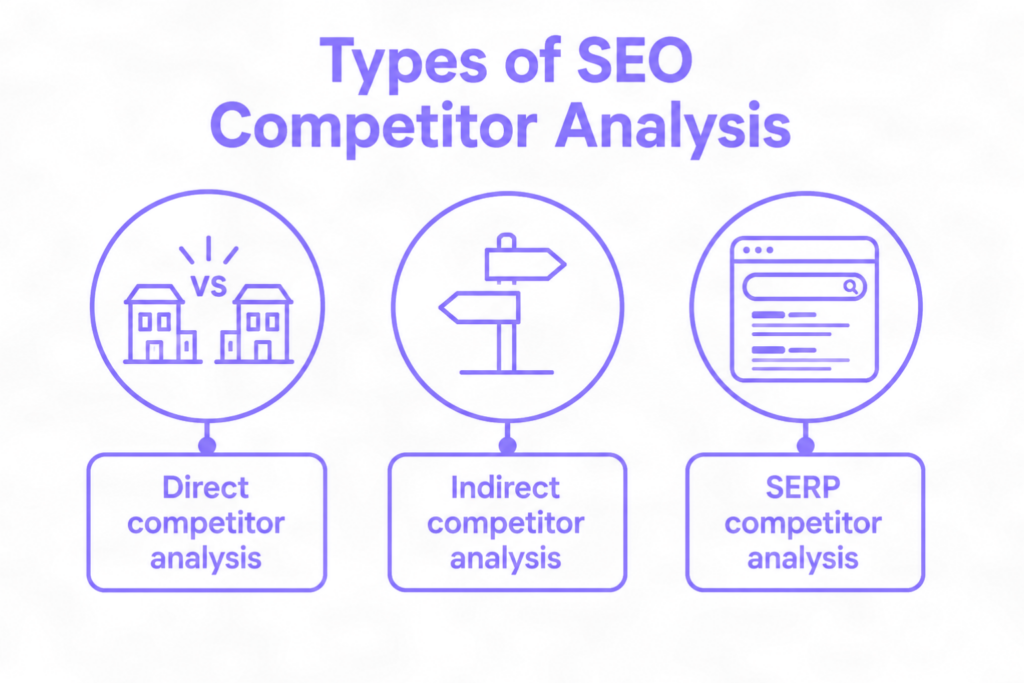
- Direct competitor analysis – Evaluates businesses selling identical products or services. These rivals share your target keywords and customer experience goals. Their content strategy directly benchmarks against yours. Domain authority comparisons matter most here;
- Indirect competitor analysis – Examines sites targeting the same target keywords but offering different solutions. A blog about “best running shoes” competes indirectly with a shoe store. Keyword gap analysis with indirect rivals reveals keyword opportunities you never considered. Their backlink profile often comes from unexpected backlink sources like forums or news sites;
- SERP competitor analysis – Looks at any page ranking for your desired terms regardless of industry overlap. Wikipedia pages, YouTube videos, or government sites become SEO competitors if they rank. SERP analysis of these results teaches search intent patterns. User intent might be informational even if you want transactional traffic. On-page SEO and technical SEO elements from SERP competitors show what Google prioritizes.
Combine all three for complete competitive analysis. Direct rivals show content improvement opportunities. Indirect ones unlock keyword gap analysis potential. SERP competitors teach SERP analysis patterns and featured snippet tactics. Your SEO strategy needs inputs from each type to maximize search visibility.
How to Identify Your True SEO Competitors
Follow this scheme to stop wasting time on irrelevant rivals.
- Run Manual SERP Checks
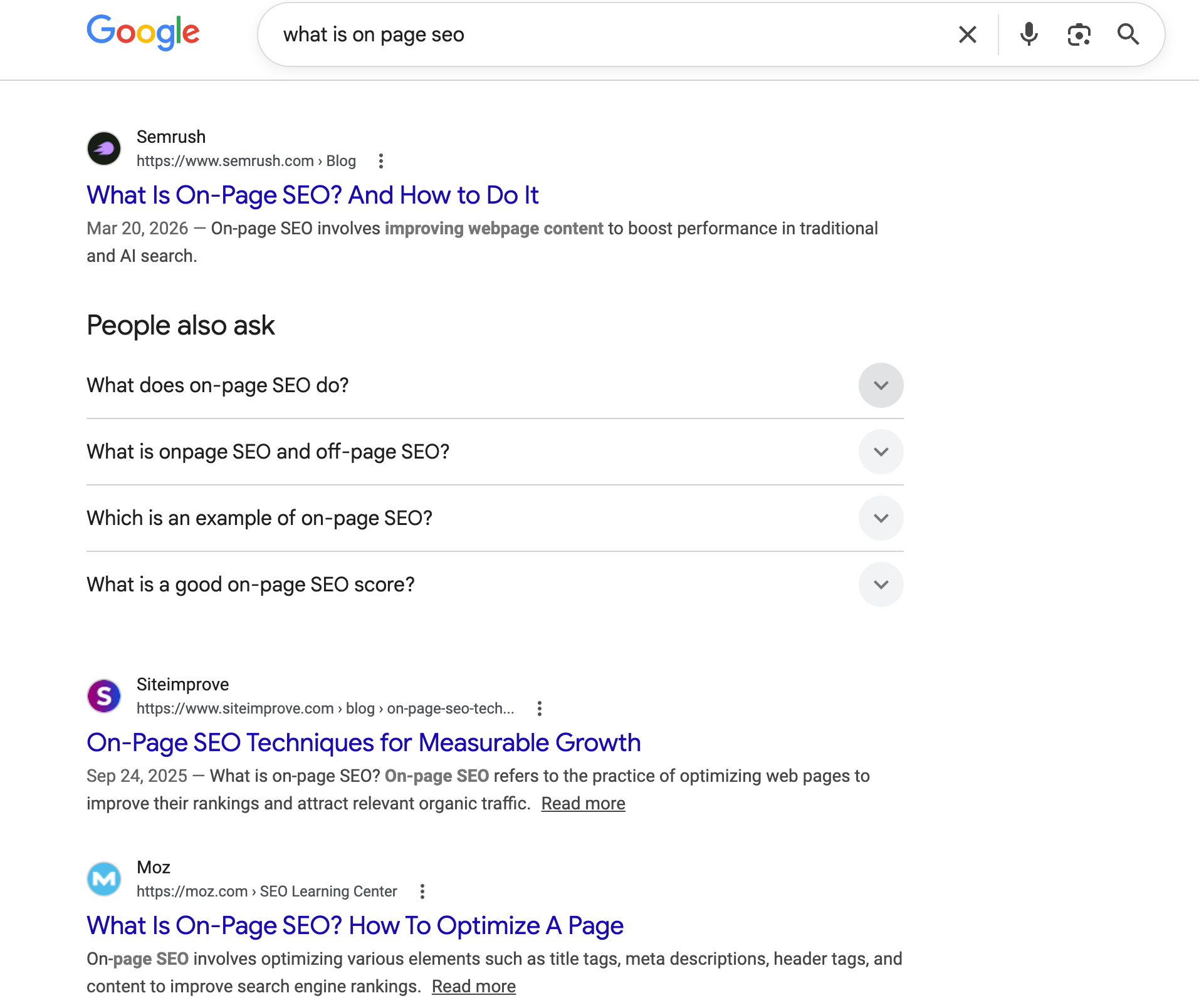
Search your main target keywords on Google. Record every domain appearing on page one. Do this for 10 to 15 high keyword volume terms. - Extract SEMRUSH Сompetitor Data
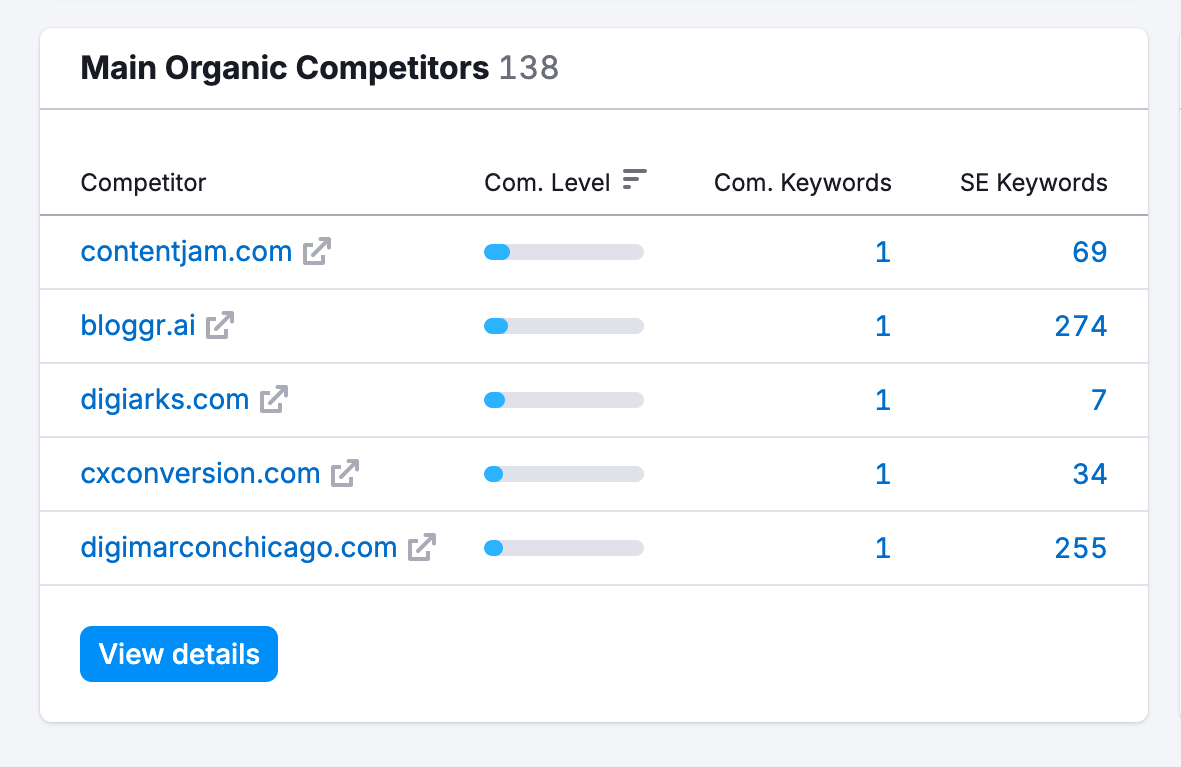
Open SEMRUSH Domain Overview. Enter your URL. Navigate to the “Competitors” section. The tool compares organic rankings overlap between you and other domains. Export the complete list as CSV. - Pull Moz Pro Authority Metrics
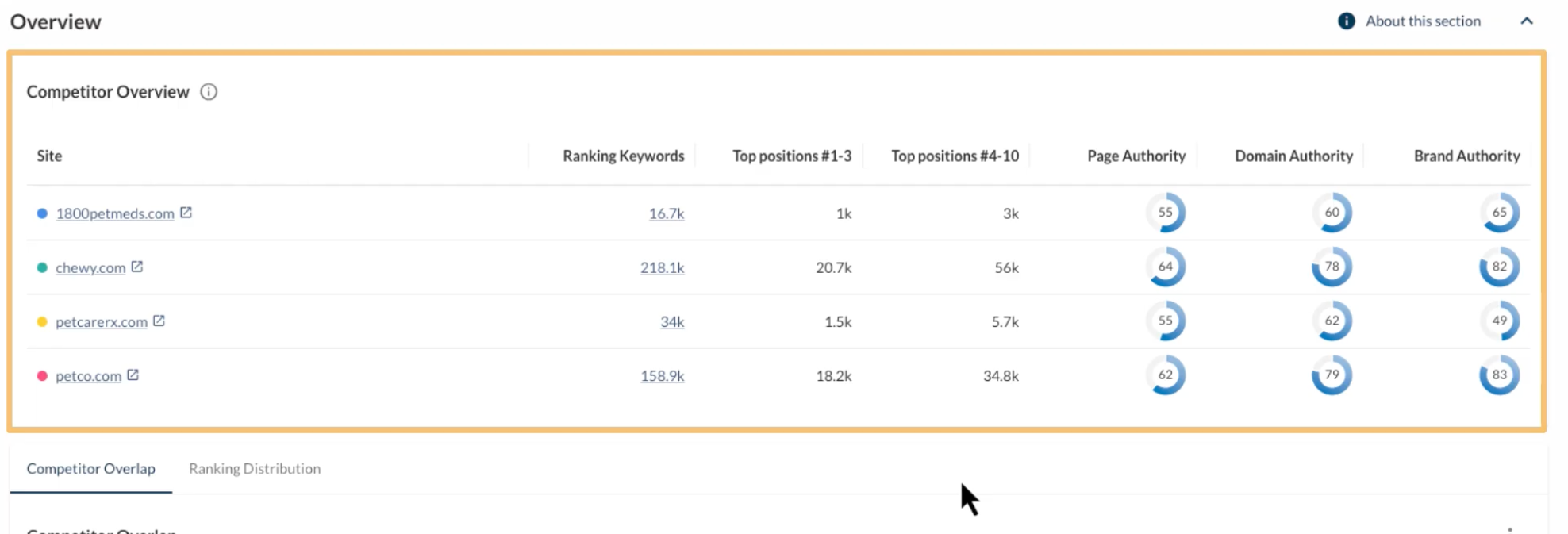
Launch Moz Pro competitor mapping feature. Focus on page authority and domain authority scores. Identify domains with overlapping keyword portfolios. Export this list separately. - Cross Reference Both Lists
Compare your SEMrush export against Moz Pro data. Domains appearing on both lists become primary candidates. True SEO competitors share at least 30% of your keyword portfolio.
- Validate Search Intent Alignment
Check each candidate’s top ranking pages. They must target the same search intent patterns as you. A competitor selling “budget laptops” doesn’t match your “premium gaming laptop” intent even if keywords overlap.
- Filter by Keyword Opportunity Relevance
Ignore brands with higher domain authority if they don’t target your specific keyword opportunities. A local bakery doesn’t compete with King Arthur Flour for “sourdough recipe” search terms. King Arthur has stronger domain authority metrics but zero local intent overlap.
- Finalize Your Competitor Shortlist
Keep 5 to 7 SEO competitors maximum. Include a mix of stronger, equal, and weaker domain authority sites. This balance reveals realistic keyword gap analysis targets.
How to Do SEO Competitor Analysis: Step-by-Step
Running a full SEO competitor analysis requires system, not speed. You cannot skip steps or rely on a single data source. Each phase below builds on the previous one. Miss the competitor shortlist and your keyword gap analysis targets the wrong domains.
Rush SERP analysis and you misunderstand user intent. Take two to three days for this process if you are thorough. A rushed SEO competitive analysis produces misleading SEO metrics that hurt rather than help your SEO strategy. Now here is the sequence that works across ecommerce, SaaS, publishing, and local business models.
Create Your Competitor Shortlist
Select 5 to 7 SEO competitors using the identification method above. Include a mix of stronger, equal, and weaker domain authority sites.
Run Keyword Gap Analysis
Use the SEMrush Keyword Gap tool. Enter your domain plus up to 4 competitors. Filter for “Missing” keywords they rank for but you don’t. Sort by keyword volume high to low. Cross check keyword difficulty scores. Pick terms under 50 difficulty with clear user intent.
Analyze Competitor Content
Visit top 3 ranking pages for each target keyword. Map their content strategy using topic clusters. Document word count, headings structure, multimedia usage. Note on-page elements like internal linking patterns. Identify content improvement areas they overlooked. Short answer questions? Missing video? Outdated statistics? Those become your advantages.
Perform Competitor Backlink Analysis
Pull their backlink profile through SEMrush Backlink Analytics. Sort by domain authority of linking sites. Find backlink sources they have but you don’t. Look for patterns. Guest posts on specific publications? Resource page links? Broken link building opportunities? Page authority of individual linked pages matters more than total backlink count. Document their top 50 backlinks by domain authority score.
Audit Technical SEO and Page Speed
Run each competitor through Google PageSpeed Insights. Compare page speed metrics across mobile and desktop. Check structured data implementation. Review their XML sitemap and robots.txt files. Note technical SEO wins like proper canonical tags or hreflang usage.
Evaluate SERP Analysis for Search Intent
For each target keyword, study the top 10 competitive organic results. What format dominates? Blog posts, product pages, videos, or tools? User intent falls into four buckets: informational, navigational, commercial investigation, transactional. Match your content to the dominant intent. If top results are “best X for Y” lists and you write a single product review, you lose.
Document SEO Metrics and Track Changes
Build a spreadsheet with columns for organic traffic, organic rankings positions, keyword volume, keyword difficulty, domain authority, page authority, backlink counts, and page speed scores. Update monthly.
SEO Competitor Analysis Exemple
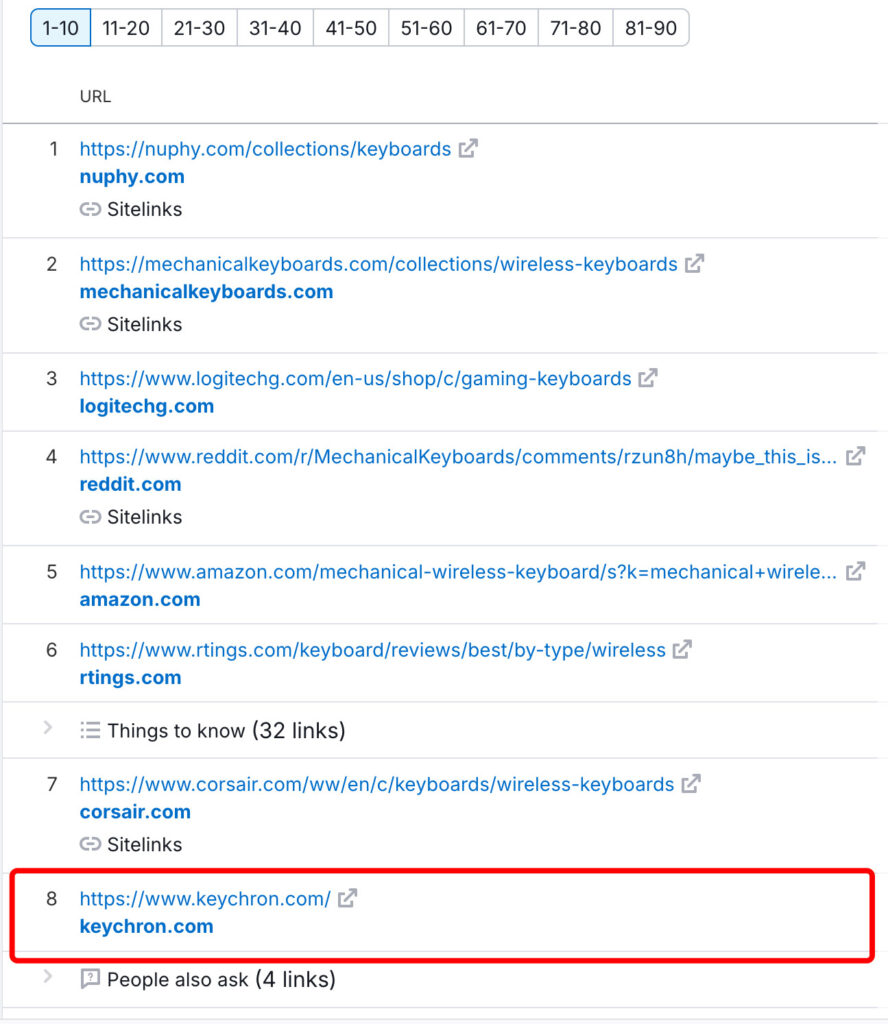
Let’s walk through a real example. Suppose you sell a “mechanical keyboard”. Your SEO competitor is Keychron. Run keyword gap analysis in SEMrush. Keychron ranks for “wireless mechanical keyboard”.
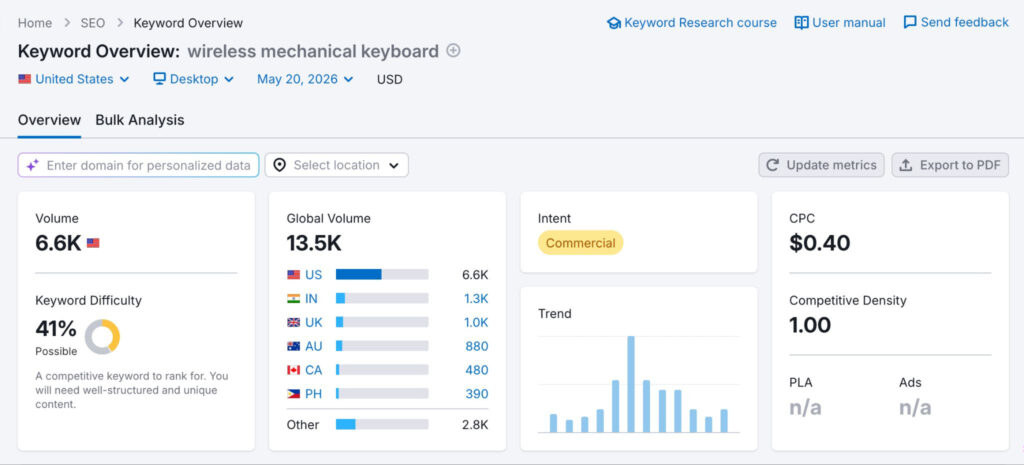
“Wireless mechanical keyboard” has 13,500 global search volumes and keyword difficulty sits at 41, but you don’t rank for this keyword.
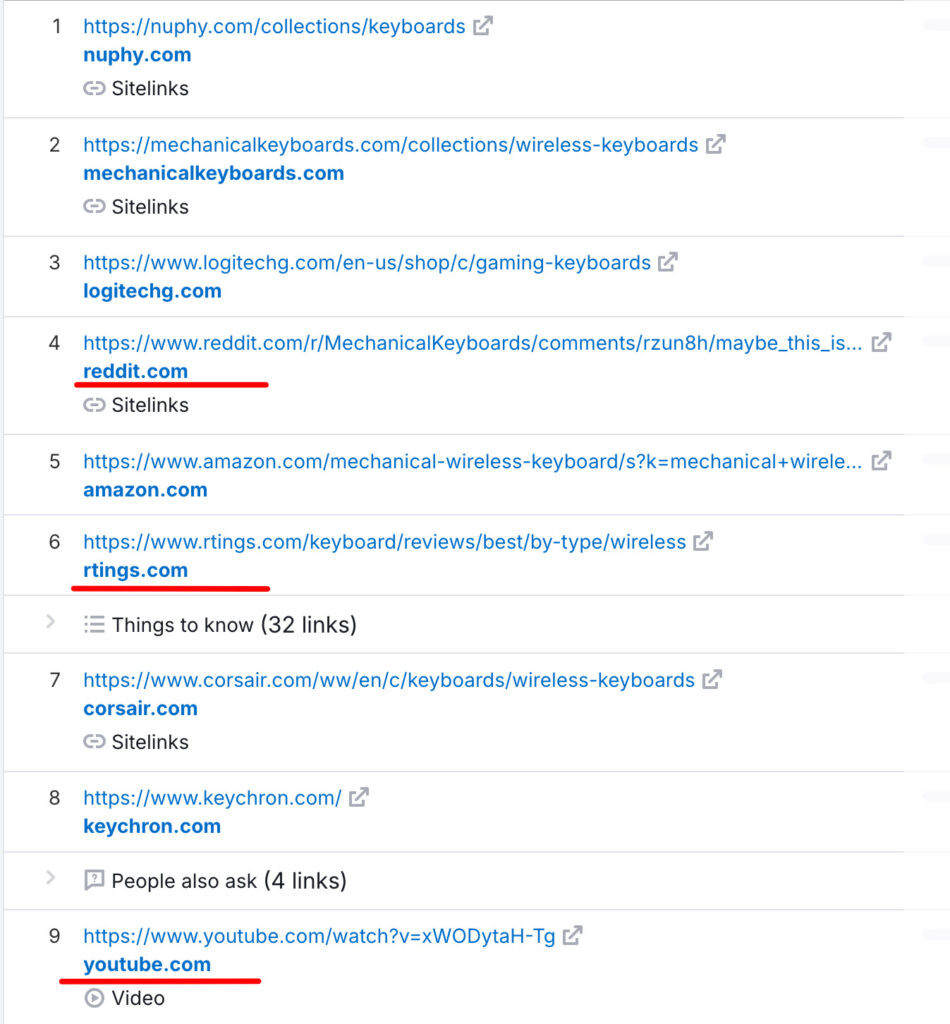
Search intent is commercial investigation. Their competitor content is a specs table comparing latency across models. Weakness? No video demonstration of latency testing. SERP analysis shows YouTube video, Reddit and review page results already in the top 10.
Your content strategy shift: create a 2 minute latency test video, embed in a detailed post, optimize on-page elements with video schema. Competitor backlink analysis reveals Keychron’s backlink sources include r/MechanicalKeyboards subreddit and TechRadar. You can target the same backlink sources plus reach smaller YouTube reviewers they missed.
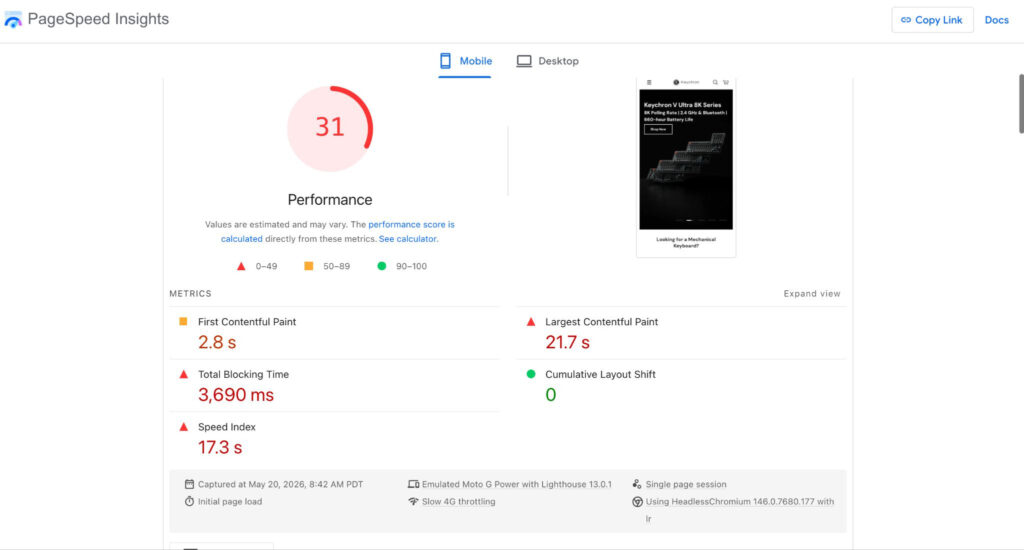
Technical SEO check shows their page speed on mobile is 31 (poor). You build a faster page at 85+.
Off-page SEO plan targets Reddit and niche forums where users ask “wireless keyboard lag issues”. Authority building happens through answering those questions with data from your video. Within 4 months you rank for that term.
This SEO competitive analysis example works across industries.
Best Free SEO Competitor Analysis Templates
Stop building from scratch. Use these free resources:
- SEMrush My Reports – Customizable dashboards tracking SEO metrics across competitors;
- Stackby SEO Competitor Analysis Template – Spreadsheet hybrid with keyword gap analysis and backlink profile tracking;
- Moz SEO Competitor Worksheet – Excel download focusing on domain authority and page authority comparisons;
- Smartsheet Competitive Analysis Report – Word template for documenting content strategy and search intent findings.
Each template serves different competitive analysis phases: SEMrush for raw data, Stackby for ongoing tracking, Moz for authority metrics and Smartsheet for presentations.
Which Tools Help With Competitor SEO Analysis
The right SEO competitor analysis tools separate guessing from knowing. Below is a ranked breakdown by function and budget.
Paid Tools for Depth and Scale
- SEMRUSH – Industry standard for competitor research. The Keyword Gap tool runs keyword gap analysis across four domains simultaneously. Domain Overview estimates organic traffic within 15% accuracy. Backlink Analytics tracks backlink sources including lost, new, and broken links;
- Moz Pro – Best for page authority and domain authority scoring. Link Explorer maps backlink profile quality over quantity. Their SERP analysis feature tracks featured snippet ownership changes weekly. Use Moz when authority building is your primary SEO strategy focus;
- Ahrefs – Excels at competitor backlink analysis. Site Explorer shows backlink profile historical growth charts. Content Gap tool identifies keyword opportunities your SEO competitors rank for but you miss. Organic rankings data updates every 24 hours.
Free Tools for Budget Constrained Teams
- Google Search Console – Shows which target keywords trigger impressions for rivals beating your position. Performance report reveals search intent mismatches. Zero cost, requires verified site ownership;
- Ubersuggest – Neil Patel’s tool offers basic keyword volume and keyword difficulty metrics. Free tier gives three searches daily. Enough for small keyword gap analysis projects;
- Ahrefs Webmaster Tools – Free tier provides limited competitor backlink analysis. Shows top 100 backlink sources for any domain. Requires account registration but no payment.
Specialized Tools for Specific Use Cases
- PageSpeed Insights – Google’s free tool for technical SEO and page speed comparisons. Run competitor URLs directly. No account needed;
- Screaming Frog SEO Spider – Free version crawls up to 500 URLs. Ideal for auditing competitor on-page elements like title tags, meta descriptions, and heading structures.Technical SEO issues become visible immediately.
Tool Selection Strategy
Start with free SEO competitor analysis tools if the budget is tight. Ubersuggest plus Google Search Console covers basic keyword gap analysis. Upgrade to SEMrush or Moz Pro when you need backlink profile depth or domain authority tracking at scale.
Never rely on a single tool. Cross reference SEO metrics between two platforms for accuracy. A competitive analysis built on one data source is a gamble, not a strategy.
How Often to Run an SEO Competitor Analysis
Quarterly is the answer for full seo competitor analysis. But certain triggers demand immediate action. Monthly keyword gap analysis catches new keyword opportunities fast.
Competitor content audits every 60 days reveal their content strategy shifts. Backlink profile checks weekly if you’re in the link building intensive phase. SERP analysis every two weeks because competitive organic results change quickly for high keyword volume terms.
Seasonal industries need monthly analysis three months before peak season. New competitors appearing in organic rankings trigger immediate mini audits. Technical SEO competitor checks every six months unless page speed algorithm updates drop.
Search intent shifts happen slowly, review twice per year. The competitive landscape never stops moving. Set calendar reminders. Document findings in your template from above. Adjust SEO strategy based on data not hunches. Your search visibility depends on outworking not just outranking them.
Related Posts
Ethan Parker
March 20, 2026
Off-Page SEO Checklist: Build Authority in 10 Steps
You built a beautiful website. The on-page SEO is tight. Headers flow, keywords sit naturally, and your content beats the…
Ethan Parker
June 25, 2026
10 Content Optimization Strategies to Increase Rankings, Traffic and AI Citations
Most content fails to rank not because it lacks keywords, but because it doesn’t fully answer the reader’s question, or…
Ethan Parker
May 05, 2026
How to Perform a Complete SEO Audit in the LLM Era?
The rules of the SEO game have changed as large language models have begun to reshape how people search for…
Ethan Parker
March 19, 2026
10 Common Technical SEO Issues Killing Your Rankings (And How to Fix Them)
SEO issues often lurk quietly in most websites. They silently sabotage your Google rankings without any warning. One overlooked server…
Ethan Parker
March 19, 2026
6 The Best On-Page SEO Tools and Services For Google Optimization in 2026
Let’s be blunt, you can write the most insightful blog post on the planet, but if your SEO fundamentals are…
Ethan Parker
February 26, 2026
What is On-Page SEO: Definition, Importance and Optimization
Search keeps flipping upside down these past few years, AI Overview eating clicks, results looking weirder by the month. Yet…
Ethan Parker
May 05, 2026
How to Create a Winning SEO Strategy?
SEO has changed and SEO strategy is no longer limited to just keywords. That old playbook is dying and what…
Ethan Parker
February 26, 2026
What is Off-Page SEO? Definition, Optimization and Strategies
You’ve built a beautiful website. The content is sharp, the keywords are placed just right, and the pages load faster…
Ethan Parker
April 30, 2026
How Do I Check My Google Ranking For Free?
Putting time or money into Search Engine Optimization without measuring the results of that work does not make much sense.…
Ethan Parker
February 23, 2026
61 Types Of SEO (Search Engine Optimization) for 2026
Search engine optimization looks nothing like it did a few years back. AI now sits front and center in almost…