
 Ethan Parker
February 26, 2026
Ethan Parker
February 26, 2026
Off-Page SEO Checklist: Build Authority in 10 Steps
You built a beautiful website. The on-page SEO is tight. Headers flow, keywords sit naturally, and your content beats the…
You built a beautiful website. The on-page SEO is tight. Headers flow, keywords sit naturally, and your content beats the competition. Then nothing happens. No traffic. No rankings. Just silence.
Welcome to the reality of off page SEO. Google does not judge your site solely by what you say about yourself. It looks at what others say about you. The signals from outside your domain carry massive weight. According to our data, sites with strong off-page profiles rank for 3 to 5 times more keywords than those relying on on-page alone.
Off-page SEO covers everything outside your website that influences search visibility. Backlinks lead the charge. But brand mentions, social signals, and local citations also matter. This checklist walks you through ten actionable steps. Skip none of them. Your authority depends on it.
What is Off-Page SEO
Off-page SEO encompasses external activities influencing search rankings. Signals of trust, relevance, and authority flow from third-party domains. Reputation management at scale.
While on-page SEO focuses on content, structure, and technical elements you control, off-page deals with the external web. Backlinks form the backbone. Each link from another site acts as a vote. Some votes carry more weight than others. A link from a major publication? Heavy. A link from a random blog with zero traffic? Light.
But links are not the whole story. Off-page SEO also includes:
- Brand mentions (even without links);
- Social media engagement;
- Guest posting on authoritative domains;
- Influencer relationships;
- Local business listings and citations;
- Customer reviews across platforms.
Google’s algorithms have evolved. They now assess entity-based relevance. If authoritative sites mention your brand in context, that signals you belong in that space. The PageRank algorithm, developed by Google founders, still influences how link equity flows. Newer layers like TrustRank filter out spammy signals.
We think many site owners obsess over on-page tweaks while ignoring the external ecosystem. That is like opening a shop in a back alley and wondering why no one walks in.
Why You Need to Check Off-Page SEO
Running an off page SEO checklist is not optional. It is survival.
First, competition demands it. Your rivals are building links. They are appearing on podcasts. They are getting quoted in industry roundups. If you stand still, you fall behind. Domain Authority (DA) , a metric developed by Moz, measures a site’s ranking potential. It relies heavily on linking domain quality. Lower DA sites struggle to outrank higher DA competitors, even with superior content.
Second, search engines use off-page signals to validate your expertise. Anyone can write a blog post. Not everyone gets cited by trusted sources. When multiple linking domains point to your content, Google interprets that as a stamp of approval. The algorithm asks: “Do real people find this resource valuable enough to reference?”.
Third, off-page activity drives direct traffic. A single mention on a high-traffic site can send thousands of visitors. Some convert. Some subscribe. Some become brand advocates. That traffic signals engagement to Google, creating a positive feedback loop.
According to our analysts, businesses that conduct quarterly off-page audits recover from algorithm updates faster. They spot lost links early. They identify toxic backlinks before penalties hit. They track anchor text distribution to avoid over-optimization flags.
Neglecting off-page SEO leaves your site exposed. One algorithm shift can wipe months of on-page work overnight. The checklist below builds insulation against that risk.
Off Page SEO Checklist
This is your roadmap. Ten steps. Execute them in order for maximum impact.
1. Audit Your Existing Backlink Profile
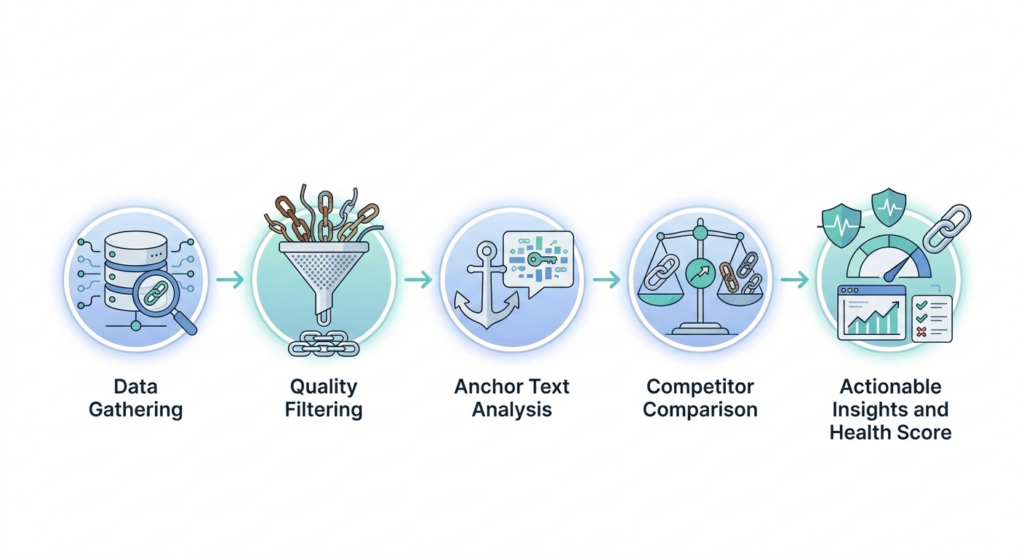
You cannot improve what you do not measure. Start with a full backlink audit. Tools like Ahrefs, Semrush, or Majestic pull data on every site linking to you. Look at:
- Linking domains: How many unique websites link to you? Quality matters more than quantity.;
- Linking pages: Which specific pages attract links? These are your assets.;
- Anchor text: Is it varied or stuffed with exact-match keywords?;
- Link quality: Are links coming from reputable sites or spam farms?.
Flag toxic links. These come from low-quality directories, adult sites, or obvious link schemes. Disavow them through Google Search Console. Google ignores bad links if you proactively disavow.
We think this step shocks most site owners. They discover links they never knew existed. Some good. Some terrible. Face the data head-on.
2. Build High-Quality Backlinks Through Content Assets
Great content attracts links naturally. But you need to promote it. Identify your best performing pages. Which ones already earn links? Double down on that topic.
Create linkable assets:
- Original research with proprietary data;
- Infographics that simplify complex topics;
- Comprehensive guides that serve as definitive resources;
- Interactive tools or calculators;
- Expert roundups featuring multiple voices.
Each asset becomes a magnet for contextual links. These are links placed within the body of an article, not buried in sidebars or footers. Contextual links pass more link juice (also called link equity). They signal relevance because surrounding content reinforces the connection.
According to our data, sites publishing original research earn 4x more linking domains than those relying on standard blog posts.
3. Master Anchor Text Diversity
Anchor text is the clickable text in a hyperlink. Google uses it to understand what the linked page is about. But over-optimization triggers penalties.
Imagine 80% of your backlinks use the exact phrase “best running shoes.” That looks unnatural. Real websites link with varied text: “click here,” “this guide,” “the brand mentioned,” or your company name.
A healthy profile mixes:
- Branded anchors (your company name);
- Generic anchors (“click here,” “learn more”);
- Partial match (contains part of target keyword);
- Exact match (rare, used sparingly);
- Naked URLs (yourdomain.com);
- Image links (alt text carries anchor value).
Spread your anchors across these categories. Keep exact match below 5% of total linking domains.
4. Pursue Guest Posting on Authoritative Sites
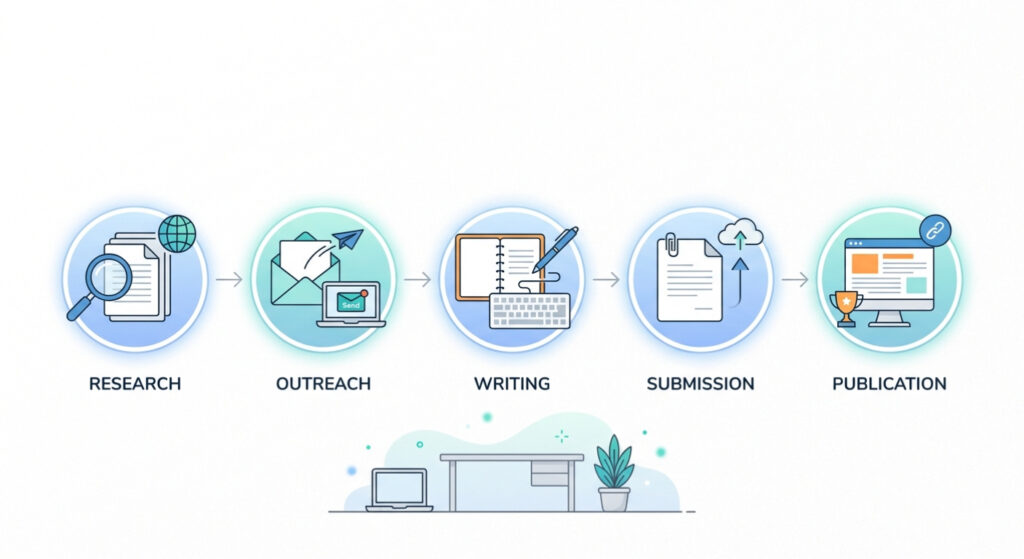
Guest posting remains effective when done right. The key is topic relevance. A link from a high-DA site in your industry carries weight. A link from a random general directory? Almost worthless.
Identify sites that:
- Publish content in your niche;
- Have real audience engagement (comments, shares);
- Accept contributor content;
- Link out to other resources naturally.
Pitch unique angles. Do not recycle what you have already published. Give them original insights. Your bio section can include one link back to your site. That link, placed on an authoritative linking page, passes PageRank and builds TrustRank.
We think guest posting fails when people chase quantity. One link from a genuine industry publication beats fifty links from low-quality directories.
5. Leverage Broken Link Building
Broken link building is link reclamation with a twist. You find broken links on other websites, create relevant content to replace them, and ask the site owner to update the link to your resource.
The process:
- Use tools like Ahrefs or Screaming Frog to find broken links on sites in your niche;
- Check if you have content that matches or improves upon the original;
- If not, create something better;
- Email the site owner politely pointing out the broken link and suggesting your resource.
This approach adds value. You help them fix a broken user experience. They give you a link. According to our analysts, broken link building has a 5-10% success rate. That sounds low until you realize you can scale it across hundreds of prospects.
6. Optimize Your Google Business Profile
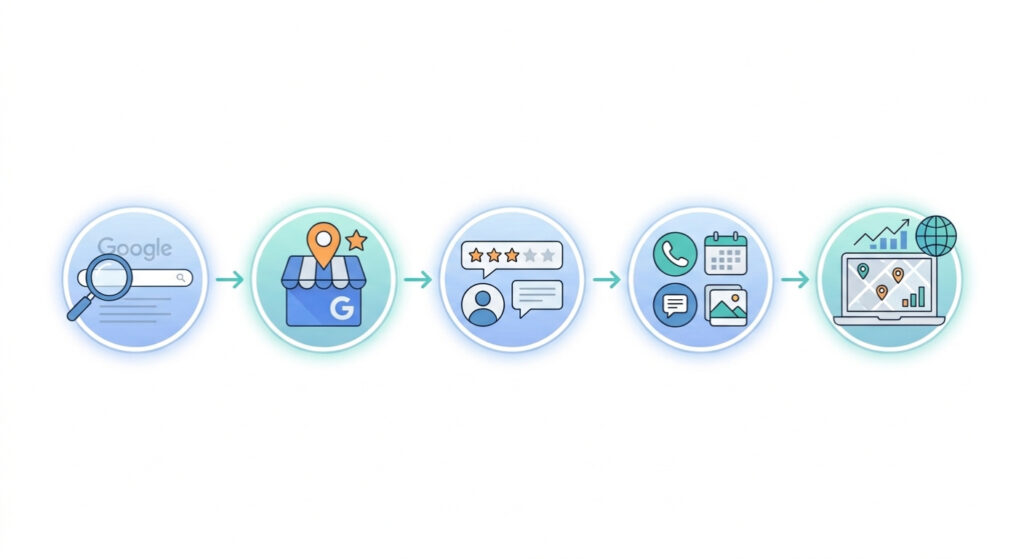
Local businesses cannot ignore this. Your Google Business Profile is prime off-page real estate. It appears in local pack results and maps. It signals location relevance and trust.
Complete every section:
- Accurate address, phone, and hours;
- High-quality photos of your location or work;
- Products and services listings;
- Posts with updates and offers;
- Questions and answers section.
Collect reviews. Respond to every one. Positive reviews build TrustRank signals. Even negative reviews offer opportunity. Respond professionally and show you care.
For businesses without physical locations, service-area businesses still qualify. Set up your profile correctly. Google uses this data to validate your existence and authority in local markets.
7. Build Citations and Local Listings
Citations are mentions of your business name, address, and phone number across the web. They do not always include links. But they still matter for local SEO.
Consistency is everything. Your NAP (name, address, phone) must match across:
- Yelp;
- Yellow Pages;
- Industry-specific directories;
- Chamber of Commerce sites;
- Data aggregators like Infogroup and Localeze.
Inconsistent citations confuse Google. Which address is correct? They may rank a competitor with cleaner data instead.
Use tools like BrightLocal or Moz Local to manage citations at scale. These platforms distribute your listing to dozens of sites and flag inconsistencies.
8. Activate Social Media Profiles and Engagement
Social media profiles themselves rank in search results. Your LinkedIn, Twitter, and Facebook pages often appear on the first page for branded searches. Own those results.
But engagement matters more than follower counts. Share your content. Respond to comments. Join relevant communities. When people share your links on social platforms, it increases visibility. More eyeballs mean more opportunities for natural backlinks.
YouTube deserves special attention. It is the second largest search engine. Video content embedded on your site increases dwell time. Your YouTube channel can rank for competitive terms and drive traffic that converts.
We think social signals act as indirect ranking factors. They amplify your reach. That reach leads to links. Do not ignore the chain reaction.
9. Improve Topic Relevance
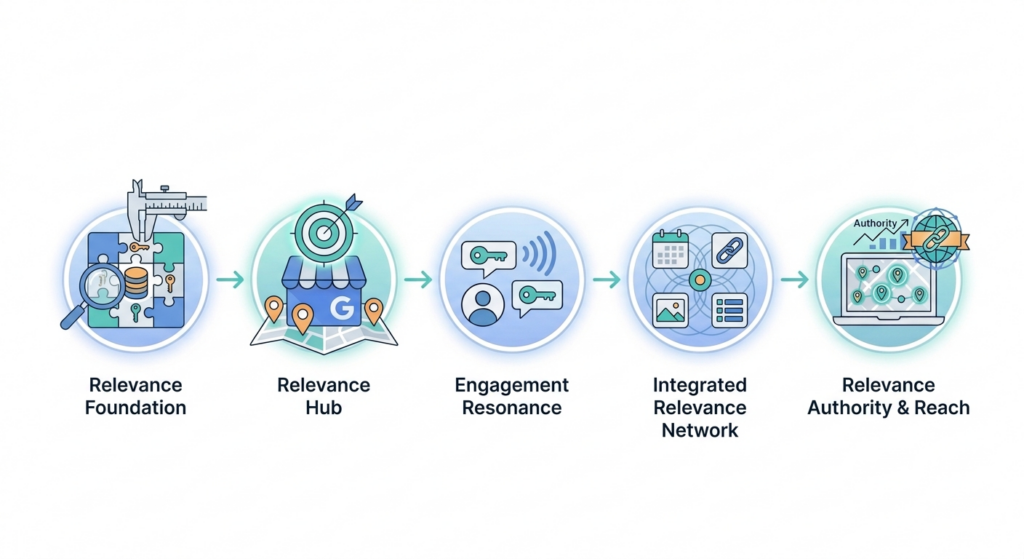
Google’s algorithms now understand Latent Semantic Indexing (LSI) keywords and topic relevance. Your off-page profile should reflect a coherent theme.
If your site sells organic coffee, but you have backlinks from automotive blogs and casino sites, the profile looks messy. Google struggles to categorize your authority.
Check your linking domains. Are they relevant to your niche? Do the linking pages contain content related to your industry? Contextual links work best when the surrounding text aligns with your topic.
Use topic hierarchy to build authority. Become known for one area. Then expand to adjacent topics. A scattered profile dilutes link equity.
10. Track Domain Authority and Trust Flow
Metrics help you measure progress. Domain Authority (DA) , developed by Moz, predicts ranking potential on a 1-100 scale. Higher DA correlates with stronger off-page profiles.
Citation Flow and Trust Flow, metrics from Majestic, measure link quantity versus quality. Citation Flow counts links. Trust Flow evaluates their trustworthiness. The ratio matters. A site with high Citation Flow but low Trust Flow may have spammy links.
Monitor these metrics monthly. Small gains add up. A DA increase from 25 to 30 signals real progress. But remember: these are predictive metrics, not ranking factors. Use them as benchmarks, not obsessions.
Tools to Measure Off-Page SEO
You cannot execute this checklist without the right tools. Manual checking scales poorly. These platforms automate the heavy lifting.
Ahrefs
Ahrefs is the best backlink analysis tool. Site Explorer shows every linking domain, linking page, and anchor text. Content Explorer helps find broken link opportunities. The Link Intersect tool shows sites linking to competitors but not to you.
Semrush
Semrush offers backlink analytics with a toxicity score. The Backlink Gap tool reveals link opportunities from rivals. Domain overview provides quick authority snapshots.
Majestic
Majestic specializes in link analysis. Citation Flow and Trust Flow metrics are unique to Majestic. The Neighborhood Check shows what other sites share your backlink profile.
Moz Pro
Moz Pro is a platform for evaluating domain authority. Link Explorer tracks new and lost links. Spam Score flags potentially harmful domains. Moz Local handles citation management.
Google Search Console
Free and essential. The Links report shows top linking domains, most linked pages, and anchor text distribution. Use this as your baseline before diving into paid tools.
BrightLocal
BrightLocal is designed for local SEO optimization. Citation tracking, review monitoring, and Google Business Profile performance all live here. Essential for businesses with physical locations.
BuzzSumo
BuzzSumo specializes in content distribution. Find influencers who share your niche. Identify content that performs well in your industry. Pitch those authors for guest post opportunities.
Hunter.io
Hunter.io – email discovery tool. Find contact details for site owners and content managers. Useful for outreach campaigns tied to broken link building or guest posting.
According to our analysts, most teams use a combination of 2-3 tools. Ahrefs or Semrush for links. BrightLocal for local. BuzzSumo for content outreach. The right stack depends on your specific goals.
Final Thoughts
Off-page SEO rewards patience. You cannot buy a thousand links today and rank tomorrow. Sustainable authority builds over months and years. But the momentum compounds. Each high-quality backlink makes the next one easier to earn.
Run this off page SEO checklist quarterly. Audit your profile. Remove toxic links. Build new assets. Reach out to relevant publishers. Track your Domain Authority and Trust Flow. The results will show in search visibility and organic traffic.
We think many site owners underestimate how much external signals matter. They tweak meta descriptions for hours but ignore the 500 linking domains pointing to their site. Flip that equation. Balance on-page precision with off-page persistence. That is how you build authority that lasts.
Related Posts
Ethan Parker
February 26, 2026
What is Off-Page SEO? Definition, Optimization and Strategies
You’ve built a beautiful website. The content is sharp, the keywords are placed just right, and the pages load faster…